News on Trump Seizing Confrontation Over Immigration in California
In early June 2025, President Trump escalated a high-stakes confrontation with California over immigration enforcement, capitalizing on protests and clashes triggered by federal raids in Los Angeles. This move underscored his administration’s hardline policies and intensified federal-state tensions.13 Below is a structured overview based on recent developments.
1. Event Background: Escalating Raids and Protests
- On June 6, 2025, U.S. Immigration and Customs Enforcement (ICE) launched large-scale operations across Los Angeles County, targeting undocumented immigrants and arresting over 44 individuals at sites like shopping malls and factories.
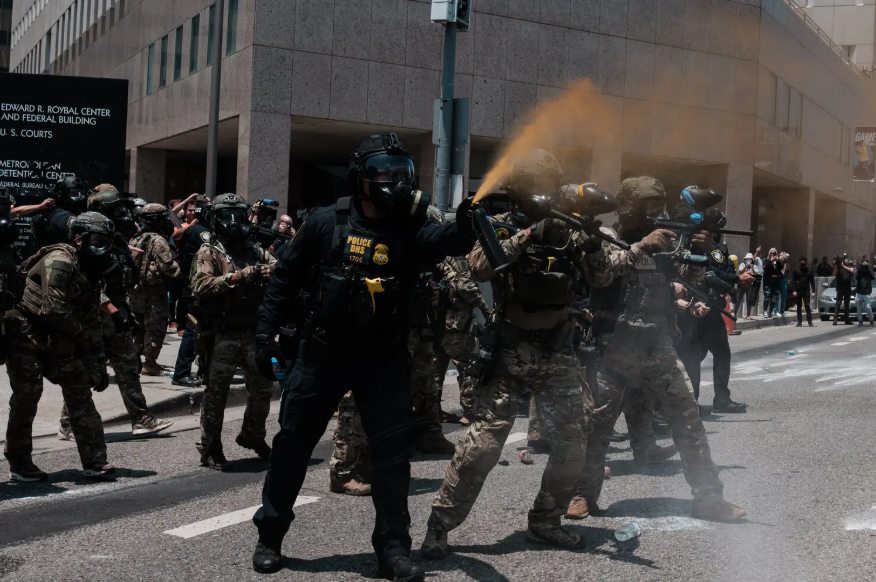
- The raids—focused on areas with high Hispanic/Latino populations, such as Paramount (82% Hispanic)—sparked immediate protests, with demonstrators clashing with federal agents using tear gas, rubber bullets, and projectiles. By June 7–8, violence escalated, prompting Los Angeles to declare a tactical alert.
2. Trump’s Aggressive Intervention
- Trump responded decisively: On June 7, he ordered 2,000 National Guard troops into Los Angeles without California Governor Gavin Newsom’s consent—the first such federal deployment without state request in 60 years.37 He threatened to mobilize active-duty Marines if unrest continued, framing the action as restoring “law and order.”
- Publicly, Trump denounced protesters as “thugs” and invoked a confrontational slogan—”they spit, we hit”—claiming demonstrators spat on officers to justify a harsh crackdown.13 He also banned face masks at protests, alleging they hid criminal intent.
3. Political Motives Behind the Confrontation
- Fulfilling Campaign Promises: Trump leveraged the crisis to appeal to his MAGA base, framing immigration as a threat to jobs and security. His administration set daily arrest targets (e.g., 3,000 undocumented immigrants) and expanded rapid deportations, aligning with his 2024 pledges.
- Asserting Federal Authority: Analysts argue Trump exploited California’s resistance—a Democratic stronghold—to showcase presidential power. By overriding state objections, he aimed to “liberate” Los Angeles from “immigrant invasion,” reinforcing his “strongman” image amid sagging domestic policy wins like tariff negotiations.
- Diverting Attention: With stalled initiatives (e.g., Federal Reserve rate cuts), the confrontation diverted public focus from other failures, amplifying “crisis” rhetoric to unify conservative voters.
4. Consequences and Broader Implications
- Federal-State Conflict: Governor Newsom condemned the deployment as “deliberate provocation,” accusing Trump of inflaming tensions for political gain. Legal battles loom, as California challenges the deployment’s constitutionality.
- Social and Legal Fallout: Protests spread to cities like New York, with arrests and property damage (e.g., burned vehicles). Human rights groups criticized excessive force, while a federal judge had earlier ruled similar tactics violated due process.
- Election-Year Impact: The standoff risks deepening “red-blue” divides, fueling rhetoric of “national divorce.” Critics warn short-term suppression won’t resolve immigration policy flaws, potentially alienating moderates ahead of 2028 elections.
This confrontation exemplifies Trump’s strategy to weaponize immigration for political theater, testing constitutional boundaries while exposing America’s polarized governance.